The Tazumal ruins offer a fascinating glimpse into the Mayan world and a chance to connect with the rich history of this Central American nation. As Mayan ruins go, the Tazumal archaeological site isn’t a big one, so think of a visit here as something to combine with nearby Casa Blanca if making a special trip to check them out. It’s also a little weird to visit, as it’s basically in a metropolitan zone, so it is in stark contrast to its modern surroundings.
Table of Contents
What Are the Tazumal Ruins El Salvador?
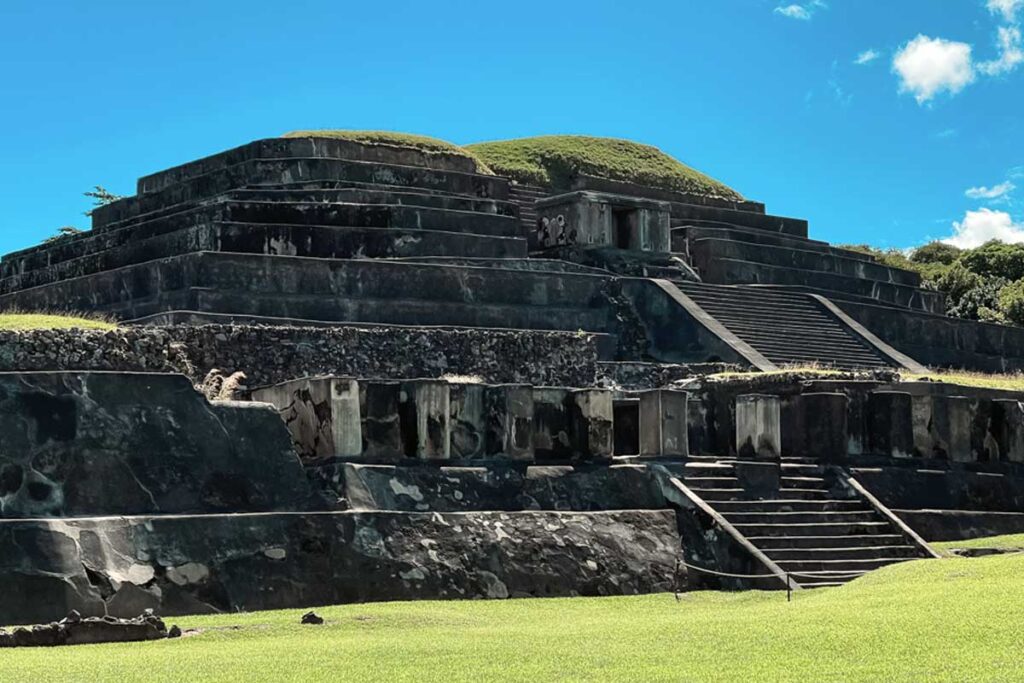
Tazumal, meaning the place where souls are consumed in the local Quiche language, is one of the most important and best-preserved Mayan ruins in El Salvador. While its origins date back to the Classic Maya period (around 250 AD), the site remained an important center through the Post-Classic period and was even influenced by surrounding cultures. Imagine a vibrant hub of religious, economic, and political activity, a place where elaborate ceremonies were performed, goods were traded, and life unfolded under the watchful eyes of its rulers.
A History Etched in Stone
The history of the Tazumal ruins El Salvador is complex and layered, reflecting the influences of different cultures and periods. Here’s a glimpse into its evolution:
Early Beginnings (250-900 AD): During the Classic Maya period, Tazumal emerged as a significant center, with the construction of its main structures, including the Great Pyramid.
The Pipil Influence (900-1200 AD): After the decline of the Classic Maya civilization, the Pipil people, originally from central Mexico, migrated to the region and exerted their influence on Tazumal.
Abandonment (circa 1200 AD): For reasons still debated by historians, Tazumal was eventually abandoned. The jungle slowly reclaimed the site, burying its secrets for centuries.
Why Visit Tazumal Ruins El Salvador? Delving into the Mayan World
Tazumal, along with Joya de Cerén, is an immersive experience that appeals to history buffs, archaeology enthusiasts, and anyone seeking a deeper understanding of El Salvador’s cultural heritage. Here’s what makes it so special:
Witnessing Ancient Mayan Architecture: The site boasts impressive pyramids, temples, and platforms, showcasing the architectural prowess of the Maya civilization. The Great Pyramid, standing at 24 meters (79 feet) tall, is the main attraction here.
Uncovering Historical Artifacts: The on-site museum displays a fascinating collection of artifacts unearthed during excavations, including pottery, jade ornaments, and religious objects, providing insights into the daily life, beliefs, and rituals of the Mayan people.
Exploring a Site with Layers of History: Tazumal’s history is a melting pot of cultures, with evidence of Mayan, Pipil, and other indigenous influences. Exploring the site offers a unique opportunity to understand the interconnectedness of ancient civilizations.
A Glimpse into Mayan Culture and Society: By examining the structures, artifacts, and historical records associated with Tazumal, you can gain a deeper understanding of the complex social, political, and religious systems that governed Mayan society.
Planning Your Visit to Tazumal Ruins: Practical Information
Ready to embark on your historical adventure? Here’s everything you need to know to plan your visit to the Tazumal archaeological site:
Getting There
Location: Tazumal ruins are located in Chalchuapa, a town in the Santa Ana department of El Salvador. It’s approximately 75 kilometers (47 miles) from San Salvador, the capital city.
Transportation:
By Car: The easiest way to reach Tazumal is by car. You can rent a car in San Salvador and drive to Chalchuapa, following well-marked roads. The journey takes approximately 1.5 to 2 hours.
By Bus: Public buses are a more affordable option. Take a bus from San Salvador to Santa Ana, then transfer to another bus that goes to Chalchuapa. Once in Chalchuapa, you can take a local bus or taxi to the Tazumal archaeological site. Be prepared for a longer travel time (around 3-4 hours) and more crowded conditions.
Tour Operators: You can book a guided tour from San Salvador that includes transportation to and from Tazumal archaeological site.
Opening Hours and Entrance Fees
Opening Hours: Tazumal is typically open from 9:00 AM to 4:00 PM, Tuesday to Sunday. It is closed on Mondays. It’s always a good idea to check the latest opening hours before your visit, especially during holidays.
Entrance Fees: The entrance fee is generally around $5 USD for foreigners and $3 USD for Salvadoran citizens. The fee includes access to both the archaeological site and the museum. You can check here for up-to-date prices.
What to Expect
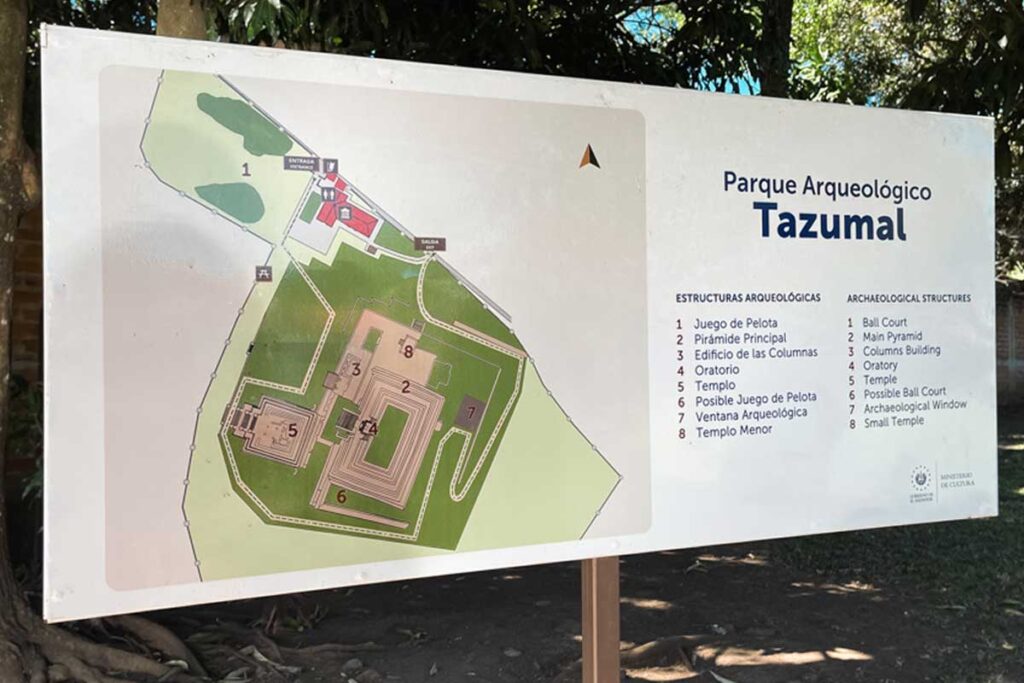
The Site: The Tazumal archaeological site is well-maintained and features several impressive structures, including the Great Pyramid, smaller pyramids, plazas, and residential areas. You can explore the site on foot, following designated paths.
The Museum: The on-site museum houses a fascinating collection of artifacts unearthed during excavations. Exhibits are in Spanish and English providing information about the history of the Tazumal ruins, Mayan culture, and the significance of the artifacts.
Guided Tours: Guided tours are available at the site, offering in-depth information about the history, architecture, and significance of Tazumal. Consider hiring a guide to enhance your experience.
Tips for a Successful Visit
Wear Comfortable Shoes: You’ll be walking around, so wear comfortable shoes suitable for uneven terrain.
Bring Sunscreen and a Hat: The sun can be intense, especially during the dry season. Protect yourself with sunscreen, a hat, and sunglasses
Stay Hydrated: Bring plenty of water to stay hydrated, especially if you’re visiting during the hotter months. But if you forget your water, don’t worry, there is a very likely to be a street vendor in the car park outside, and it’s set in a metropolitan area, so shops are nearby.
Learn Some Basic Spanish: While English is spoken in tourist areas, knowing some basic Spanish phrases will be helpful, especially when interacting with locals.
Respect the Site: Tazumal ruins is a historical site, so treat it with respect. Avoid climbing on the structures or touching the artifacts.
Allow Ample Time: Allocate at least 2-3 hours to fully explore the site, museum and surroundings.
Beyond Tazumal: Exploring Chalchuapa and the Surrounding Area
Chalchuapa is a charming town with a rich history and culture. While you’re visiting Tazumal, take some time to explore the town and its surroundings:
Casa Blanca Archaeological Park: Located just a short distance from Tazumal archaeological site, Casa Blanca is another important Mayan site featuring several pyramids and a museum. While less extensively excavated than Tazumal, it offers a fascinating glimpse into the Mayan past.
Chalchuapa Town Center: Explore the historic town center, with its colonial architecture, central park, and local market. Immerse yourself in the local culture and sample traditional Salvadoran cuisine.
Laguna Cuzcachapa: This beautiful crater lake is located a few kilometers from Chalchuapa and offers stunning views and opportunities for hiking and birdwatching.
Tazumal Ruins El Salvador: A Strong Connection to the Past
Visiting Tazumal ruins is more than just a sightseeing trip; it’s an opportunity to connect with the past, to learn about a fascinating civilization, and to appreciate the rich cultural heritage of El Salvador, which you learn more about in our full travel guide.
As you stand amidst the ancient pyramids, imagine the bustling city that once thrived here; listen to the whispers of the Mayan priests, traders, and artisans who walked these grounds centuries ago.
A visit to the Tazumal ruins is an unforgettable journey through time, a reminder of the enduring legacy of the Mayan civilization. So, plan your trip, pack your bags, and prepare to be transported to the heart of El Salvador’s ancient Mayan world. The mysteries of Tazumal archaeological site await your discovery.