Fernando Llort: The Artistic Heartbeat of La Palma, El Salvador
Imagine a village painted with dreams, where every wall, every doorway, and every tile sings with vibrant color and whimsical figures. This is not a fairytale; it’s the legacy of Fernando Llort, the artistic soul who transformed the unassuming town of La Palma, El Salvador, into a celebrated center of art and culture. His influence extends far beyond the brightly hued murals; it’s woven into the very fabric of the community, empowering generations and showcasing the beauty of Salvadoran identity.
The Genesis of an Artist: Llort’s Early Life and Influences
Fernando Llort Choussy, born in San Salvador in 1949, embarked on an artistic journey that would forever change the landscape of his country. His early life was steeped in creativity. Even from a young age, Llort showed an inclination toward visual expression. His initial artistic endeavors, while rooted in traditional forms, were soon to evolve into something uniquely his own. He studied theology, which gave him a profound insight into culture and humanity, but then went on to study art in France. It was during this period of international exploration that Llort’s artistic vision truly began to take shape, influenced by different styles but always driven by a desire to connect with his own roots.
He felt a strong connection to the land and the people, an inspiration that would later become the cornerstone of his artistic philosophy. This desire to connect with his cultural heritage led him to La Palma.
La Palma: A Village Transformed
In the early 1970s, Llort arrived in La Palma, a small, impoverished town nestled in the highlands of Chalatenango. He saw potential where others saw despair. Llort didn’t just want to create art; he wanted to empower the community through it.
A Collective Vision: Art as a Tool for Empowerment
Llort began teaching the local residents his artistic techniques. He encouraged them to express their own stories and experiences through art. He provided training, materials, and, most importantly, a platform for their creativity to flourish. This wasn’t just about aesthetics; it was about generating income and fostering self-sufficiency in a region plagued by economic hardship. The art became a source of pride and identity for the people of La Palma.
Llort’s approach was revolutionary. He eschewed the traditional artist-as-solitary-genius model and instead fostered a collaborative environment where everyone could participate and contribute. He taught them to create colorful, stylized designs on copinol seeds, a readily available resource in the area. He then incorporated these with wood carvings and other art such as paintings to create ornaments. This not only provided them with a sustainable income but also instilled in them a sense of ownership and pride in their work.
The Signature Style: Colors, Symbols, and Stories
The Llort style, as it became known, is immediately recognizable. It’s defined by the use of bright, vibrant colors, often depicting scenes of rural life, nature, and religious themes. It’s a mix of naive art and folk art sensibility. The style incorporates geometric patterns and whimsical figures, creating a sense of joy and optimism. Each piece tells a story, reflecting the experiences and beliefs of the people of La Palma. Common motifs include birds, flowers, houses, and people engaged in daily activities, all rendered with a playful, childlike simplicity. This unique aesthetic quickly gained popularity, attracting tourists and art collectors alike .

The Llort Legacy: Arte La Palma and Beyond
Llort’s impact extends far beyond the visual transformation of La Palma. He established Arte La Palma, a cooperative that provided a formal structure for the artisans to sell their work. This organization not only ensured fair wages for the artists but also helped to promote their art on a national and international level. Today, Arte La Palma continues to thrive, carrying on Llort’s vision of art as a vehicle for economic empowerment and cultural preservation.
A National Treasure: Recognizing Llort’s Contribution
Fernando Llort’s contribution to Salvadoran art and culture has been widely recognized. His work has been exhibited in galleries and museums around the world, and he has received numerous awards and accolades for his artistic achievements and his social impact. He is considered a national treasure, an artist who not only created beautiful art but also used his talent to uplift and empower an entire community. His most recognized works include the mosaic mural on the facade of the Metropolitan Cathedral of San Salvador, which was heavily damaged during the civil war. [externalLink insert] He revived it after the war ended.
Challenges and Triumphs: Navigating the Path of Creativity
Llort’s journey wasn’t without its challenges. The sociopolitical climate of El Salvador during the 1980s, marked by civil war, presented significant obstacles. The war forced the displacement of communities, including many of the artisans in La Palma, and disrupted the production and sale of their art. Despite these hardships, Llort remained committed to his vision, providing support and encouragement to the artists and finding innovative ways to keep the cooperative afloat. His resilience and unwavering belief in the power of art to heal and transform served as an inspiration to many.
The Enduring Appeal of Fernando Llort
What makes Fernando Llort’s art so enduringly appealing? It’s more than just the bright colors and whimsical designs. It’s the story behind the art, the story of a community transformed by creativity, empowerment, and hope. It’s the story of a man who believed in the power of art to make a difference in the world. His art is a visual representation of Salvadoran identity, a celebration of its culture, its people, and its spirit.
Experiencing La Palma Today: A Living Testament to Llort’s Vision
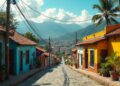
A visit to La Palma today is a truly immersive experience. The town itself is a canvas, with colorful murals adorning the buildings and artisan shops lining the streets. Visitors can witness the artists at work, learn about the history of the cooperative, and purchase unique, handcrafted souvenirs. It’s a chance to see firsthand how Fernando Llort’s vision has transformed a small town into a vibrant hub of art and culture. The spirit of Fernando Llort lives on in every brushstroke, every carving, and every smiling face in La Palma, a testament to the enduring power of art to transform lives and communities. You can experience the local food as well as see the art he inspired.
Continuing the colorful story
Fernando Llort’s legacy is not confined to the colorful walls and workshops of La Palma. His emphasis on community empowerment, creative expression, and cultural preservation continues to serve as a model for art initiatives around the world. His story acts as a reminder that art can be a effective instrument for social change, capable of bridging gaps, bolstering economies, and fostering a sense of shared identity. As new generations of artists and artisans emerge in El Salvador, they draw inspiration from Llort’s ground-breaking work, reaffirming his position as a visionary whose influence will be felt for years to come. His is a story of color, community, and the transformative power of art that continues to inspire and uplift.