
Curtido is a must try side dish that’s widely used in Salvadoran cuisine. If you’re curious about the other liitle known foods from El Salvador you may also be interested in our country guide.
Table of Contents
What Is Curtido?
El Salvador Curtido is a Salvadoran Cuisine that is a healthy type of pickled cabbage slaw or relish. Most notably Curtido is one of the main side dishes served with Pupusas, the El Salvadoran national dish, the other being Salsa Roja.
The base ingredients of this fermented cabbage Salvadoran slaw are cabbage, onion, oregano, and salt.
What Does El Salvador Curtido Taste Like?
Think tangy, salty, sour, fresh, clean, crisp, refreshing, and absolutely delicious!
Fresh slaw Curtido has less tang to it as it packs more flavor the longer you ferment it.
Is El Salvador Curtido Similar To Sauerkraut and Kimchi?
Yes! Curtido is similar to both sauerkraut, and kimchi, which are both tart coleslaws.
Salvadoran Curtido is also similar but different to other slaws in Central America. It is different from the Curtido made in Belize, which is a spicy, fermented relish made with onions, habaneros, and vinegar.
It is also different from Honduran ‘Encurtido’ which contains a large number of pickled vegetables such as onion, peppers, carrots, and beets, among others, which are all lightly pickled in vinegar brine and typically prepared so the vegetables remain in larger pieces and are crunchy and firm to bite.
Salvadorans say the most important element of Curtido that separates their cabbage slaw from similar slaws, is the addition of oregano.
Curtido For Pupusas Variations
Ingredients
Additional ingredients you might want to experiment with are crushed red pepper, sugar, kosher salt, a pinch of marjoram, red onion, spicy chillis, and lime juice.
Lacto-Fermented Curtido
You can lacto-ferment Curtido, without using vinegar, simply by taking advantage of naturally occurring good bacteria that are on the surface of all fruits and vegetables. This natural process is how sauerkraut and kimchi are made, as well as other pickled vegetables.
The sour flavor present in Curtido comes from lactobacillus and other healthy bacteria, not from vinegar or citrus. How sour the Curtido tastes depends on how long it’s fermented.
Pineapple Vinegar Fermented
Using fermented pineapple vinegar made from the flesh (and rind) of the pineapple is a traditional method used by Salvadorans to aid the fermentation of Curtido. Apple cider vinegar can also be used.
How Long Does Curtido Take To Ferment?
It depends on whether you are eating freshly prepared Curtido or are wanting to achieve the absolute best flavor, in which case fermentation is better.
Fresh Curtido
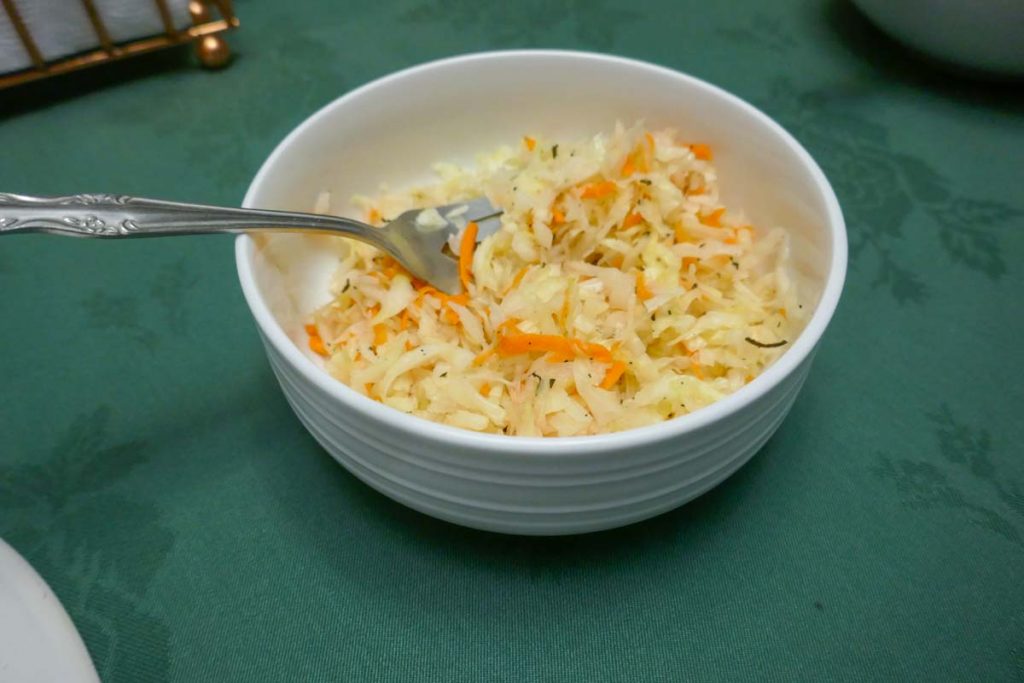
Traditional El Salvador Curtido is typically served fresh at home, either as a fresh slaw, or after fermenting for a couple of hours so it’s lightly pickled.
When just lightly pickling, you need to first scald the cabbage leaves with boiling water for 10 seconds or so to soften them, and use less salt and add enough apple cider vinegar and brine to make sure the mix in your container is fully covered right after 30 minutes of wilting. Drain off most of the vinegar liquid to serve.
Fermented Curtido
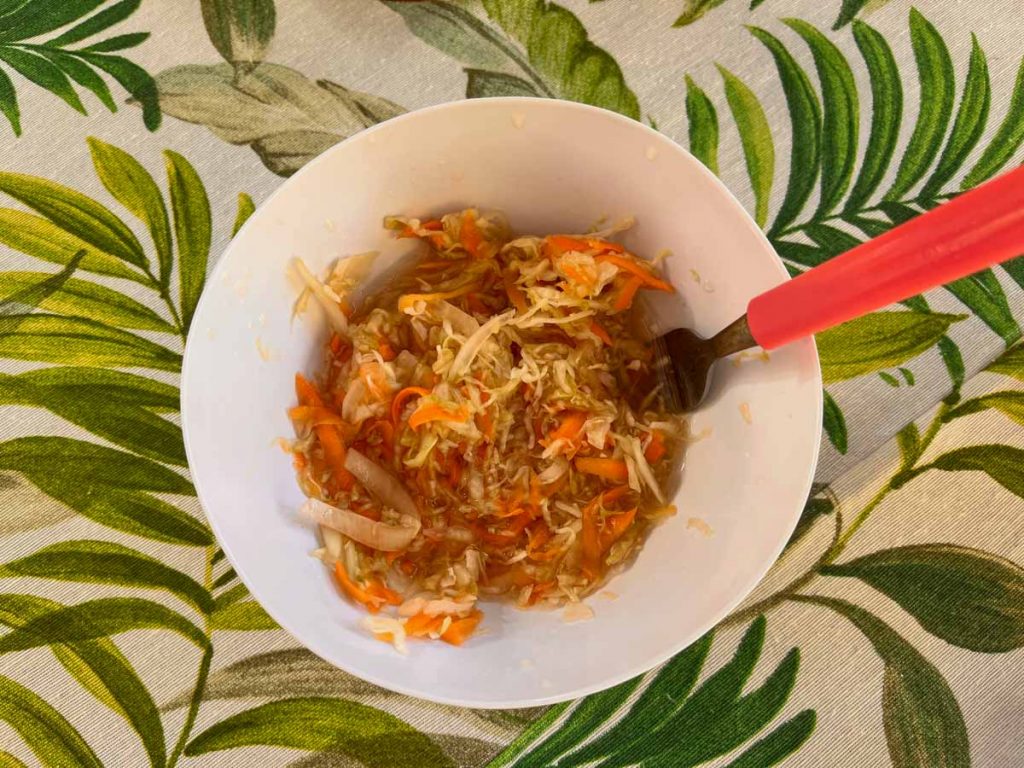
Fermented Salvadoran cabbage slaw is typically served at Pupuserias and it will have been pickled for 48 hours or more in a huge jar. When making fermented Curtido, aim to leave the cabbage slaw for as long a time as you can, as you will be able to taste a subtle difference in flavor every day because the salty liquid becomes tangier as it sits.
Does Curtido Need To Be Refrigerated?
Yes. It keeps in the fridge for months, and the flavor gets better and better with time.
Curtido Recipe - Salvadoran Pickled Cabbage Slaw
Print RecipeIngredients
- 1 medium green cabbage
- 1 medium yellow onion
- 1 cup shredded carrots
- 1 Jalapeno or chili flakes (optional)
- 1 Teaspoon fresh Salvadoran oregano
- 1/4 cup of Pineapple vinegar
- 2-3 teaspoons salt
Instructions
Step One
Traditionally Salvadoran green cabbage is used, but purple is fine. Whichever you are using, use a fresh medium-sized cabbage, rather than pre-shredded packaged cabbage as this will have less of the good bacteria needed to begin the fermentation process.
Remove a few outer leaves of the cabbage and put them to the side. Then, thinly slice or chop the cabbage.
Step Two
Thinly slice an onion in half rings and shred the carrots with a box grater or use a veggie peeler to create long flat strips. Slice the jalapeño too if you are using it.
Step Three
Place the ingredients – cabbage, carrots, onions, and oregano (Salvadoran is best, but Mexican oregano is OK too, as is dried oregano) in a large bowl, all except the jalapeño and salt, and mix them together well. Then pound the mixture a little or use a large pestle, or failing that your hands to help it release liquid. Layer the thinly sliced veggies with salt and then let the mixture sit for 10-20 minutes or until you can see it getting juicy.
Step Four
Distribute jalapeño rings to your taste (or chili flakes, if using) in the bottom of a large clean sterile mason jar or 2 to 3 smaller jars. Add a little pineapple vinegar or similar, then fill your jar(s) with the cabbage mixture packing tightly, pressing down with a pounder or similar, leaving a 1 or 2-inch space at the top. The mixture should be juicy.
Step Five
You want enough vinegar solution to completely cover the slaw. Pack in the cabbage leaves you set aside on top of the cabbage mixture to help keep it submerged. Alternatively, you can use a fermentation weight or an easy way to make weight is to add a sandwich-sized zip lock bag on the top (fill with water and zip it closed). Then loosely cover the top of the jar with a cheesecloth or a loose lid.
Step Six
Leave at room temperature for 3-5 days, checking daily to make sure the cabbage is still submerged, and pack it down again if need be. The hotter the weather is, the faster the fermentation process will be. After about 3 days you should begin to see bubbles, which is a sign that the bacteria are busy making your Curtido.
Step Seven
Refrigerate once you see bubbles, keeping the fermented cabbage mix submerged. The flavor will continue to develop over time. Your Curtido will keep for many months as long as it is submerged.






Thank you for the recipe I’m salvadorian but im always looking to perfectionate my curtido